-0.png?w=698&h=143)

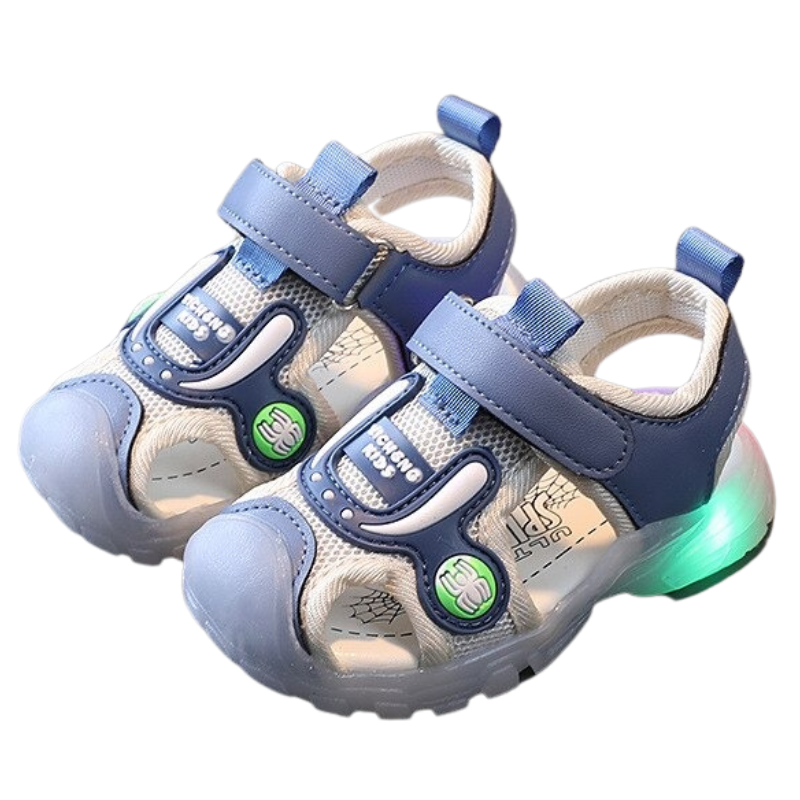
A useful indoor-school-shoe routine starts with the school's requirements and a pair your child can manage. Keep the indoor and outdoor pairs distinct, practise the change at home and agree on how shoes will come home for cleaning or a fit check.
September is a good time to notice whether the routine works in practice. The challenge may not be buying another pair. It may be a fastening that takes too long, similar-looking shoes in a shared cubby or an indoor pair that never comes home to be checked.
Confirm the job of the indoor pair
Ask whether the shoes are for classrooms only or also for gym. Find out whether the school specifies a sole type, toe coverage or fastening. Do not assume a shoe marketed as casual, light-up or “non-slip” meets the school's rules.
For instance, a child may need one approved pair for classroom use and specific footwear for physical education. A sandal that is comfortable at home does not settle either requirement.
The Ultra Soft LED Casual Shoes are a lighted sport-sandal style. That distinction matters: they are not a substitute for a closed shoe when the school requires one.
Practise the complete change
Set the shoes up as they will be at school. Ask your child to remove the outdoor pair, keep it together, put on the indoor pair and place the first pair out of the way. Work through the actual fastenings rather than only practising with the easiest shoes in the house.
Allow enough time to see the difficulty. If opening a fastening is easy but closing it securely is hard, focus on that step. A teacher should not have to discover the issue during the first crowded transition of the day.
You can also look at the Boys Girls Breathable Mesh Casual Shoes. Before choosing, compare the selected style and closure with the school's requirements and your child's ability to use them.
Identify the pair without changing its function
Follow the school's labeling advice. Choose a label location that does not affect fit, touch an uncomfortable part of the foot or cover important product instructions. Never attach an identifying object to the sole or another walking surface.
Keep any bag simple enough for the child to open and close. A heavily packed school bag can make the shoe change harder even when the footwear itself is manageable.
Talk through a lost-shoe plan too: where should the child ask, and which adult can help? Knowing the next step is more helpful than worrying about keeping everything perfect.
Arrange a return-home check
Agree on a practical time to bring the pair home. Check fit, fastenings, wear and whether cleaning is needed. Follow the product instructions and allow it to dry fully before sending it back.
Replace the routine when the requirements change—not merely because a new term begins. If the shoes still fit, meet the rules and function well, keep using them. If they do not, choose the next pair around the problem you actually found.
For the related basics, read our guide to measuring children's feet and checking shoe fit.